How to Drive External Traffic to Your Amazon Store and Product Listings With Influencer Marketing
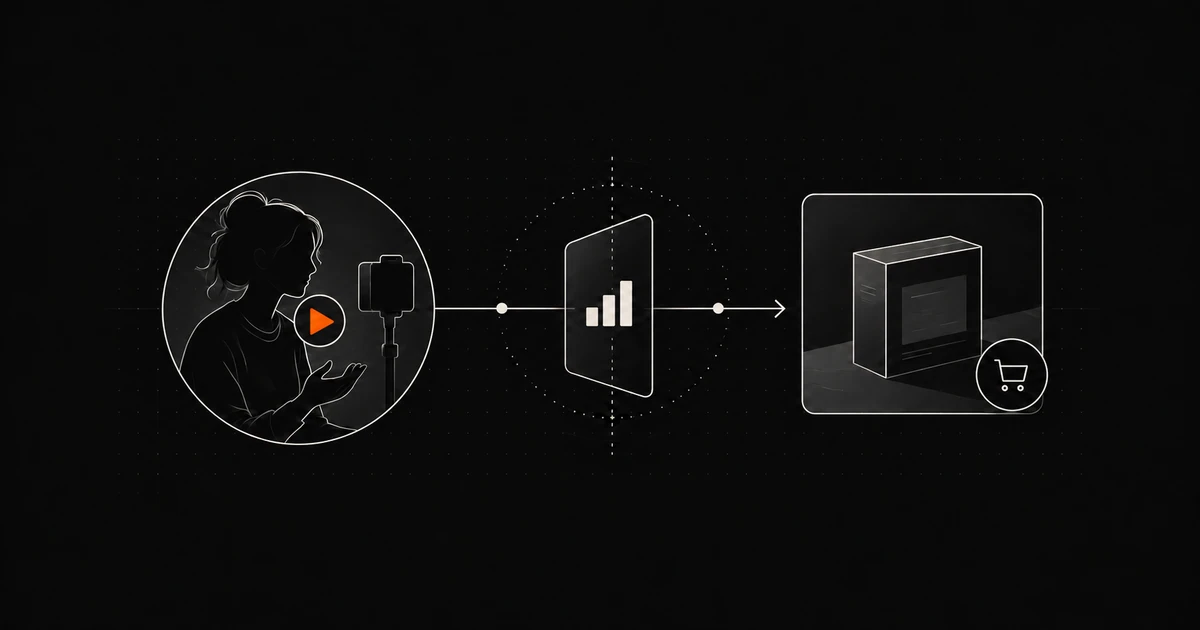
Do you want more people to find your Amazon products? An influencer can introduce them to an audience that has a reason to care. A useful demonstration, an honest comparison, or a well-placed explanation may be a better starting point than simply buying more clicks.
External traffic still needs a plan. Pick the product, the audience, and the result you want to measure before agreeing to a campaign. Do not budget on the assumption that Amazon will reward a visit with better search rankings or a higher Best Sellers Rank. This guide uses US program and disclosure examples; check availability and requirements for your own market.
What is influencer marketing?
Influencer marketing means working with a creator to introduce your product to their audience. That might be a cooking video, a niche blog, a social post, or a longer demonstration. The creator supplies their own presentation and a relationship with the people who follow their work.
A large following is not the brief. Start with relevance: who watches, what questions they ask, where they live, and whether the creator can explain your product credibly. Ask for recent examples and audience information rather than treating a follower count as evidence of sales.
Why consider influencer traffic for Amazon?
A creator can give a product context before the shopper reaches its detail page. A chef showing how a kitchen gadget fits into dinner preparation has a clear connection to that product. The same chef recommending a skin-care item needs a different reason for their audience to listen.
Think of that as a hypothesis to test. An audience can be interested in a video without wanting the product, and a click is not a purchase. Choose a destination that continues the story: the exact product page for one demonstration, or a relevant Brand Store page when the content introduces a range. Check the listing, stock, price, and delivery experience before sending visitors there.
For other ways to improve the offer around a campaign, see our broader guide to increasing Amazon sales. Keep the influencer test focused enough that you can learn something from it.
What’s in it for influencers?
A creator may quote a fee for producing and publishing content, accept a product sample for an honest off-Amazon demonstration, or earn affiliate commissions. These are different arrangements. Agree what you are buying and which relationships the audience needs to understand.
Amazon Associates lets approved participants earn commissions from qualifying purchases through their links. Approval depends on Amazon’s criteria; it is not automatic. The Amazon Influencer Program gives qualifying creators a personalized Amazon storefront and other content tools. Joining either program does not make a seller’s separate campaign exempt from advertising or review rules.
Keep paid or gifted creator content separate from Amazon customer reviews. Amazon’s US inappropriate product reviews policy prohibits compensation, including free products or discounts, in exchange for customer reviews. Do not ask a sponsored creator to post an Amazon customer review or make a sample conditional on one.
For endorsements reaching US consumers, the FTC’s disclosure guidance covers payments, free or discounted products, and other material relationships. Put a clear disclosure with the endorsement itself; a profile-only notice or one hidden behind “more” is insufficient. Video disclosures belong in the video. The creator must describe their real experience, and product claims need support.
Which products suit an influencer campaign?
Start with something the creator can show or explain usefully. These are campaign ideas, not a ranking of categories by return.
Beauty and skin care
Consider a demonstration of texture, application, packaging, or a routine. Give the creator accurate product information. Do not turn one person’s experience into an unsupported promise about results or a health condition.
Kitchen and cooking products
Show the gadget doing its actual job in a recipe or cleanup. Include practical details such as the size, the parts that need washing, and what comes in the box. A viewer should understand the work involved as well as the finished meal.
Jewelry
Ask for a clear view of scale, fastening, and how the piece looks when worn. Check any statement about materials against the product specification; a flattering image cannot establish metal purity or durability.
Fashion
Discuss fit, measurements, styling, and the item shown. Make it easy for the viewer to reach the correct variation. One model’s fit is useful context, though it cannot tell every customer which size to buy.
Baby products
A parent-focused creator could explain assembly, storage, or an everyday use that follows the instructions. Review the demonstration against the product’s actual safety information. Popularity is not evidence of safety, and an endorsement should never stand in for the checks the product requires.
Other consumer products
There may be a useful niche beyond these examples. Write down the question the content will answer. If the only idea is “hold it up and say it is good,” spend a little longer on the brief.
How to find influencers and useful tools
Search the web
Try your product type alongside “review,” “comparison,” or “best.” A search for “top 10 kitchen gadgets,” for example, can reveal publishers already covering the subject. Read their actual work before making contact. Ask how commercial placements are disclosed and whether the publisher accepts them.
Look through social content
Search the problem your product solves, relevant hashtags, and creators you already know. For eco-friendly cleaning products, #greenclean could be one starting point. Then read recent posts and comments: are people discussing the use case, or is the audience there for something else?
Contact the creator through their stated business channel. Be specific about the platform and format you have in mind, and avoid sending the same pitch to every account they operate.
Find relevant affiliate publishers
Add “Amazon affiliate” to a product search and inspect the recommendations you find. An affiliate publisher may consider your product, but membership does not promise coverage or a positive verdict. Do not offer a payment disguised as an independent “best product” award.
Explore Amazon creator storefronts
What’s Up Moms’ Amazon storefront illustrates a creator page with themed product lists. It is an example of the format, not a recommendation to hire that creator. An ordinary Amazon product link alone does not establish Influencer Program membership.
Amazon’s current Influencer Program overview also describes Creator Connections, which connects creators and brands through several compensation models. Check the options and terms available to your account rather than assuming every brand or creator can use every feature.
Compare platforms and marketplaces
A specialist platform can be another place to build a shortlist. Examples to investigate include iFluenz for Instagram collaborations, Awario for finding relevant mentions and people, and Meltwater’s influencer marketing platform, the current destination for Klear.
Upfluence, Heepsy, and HypeAuditor also offer creator discovery or campaign tools. Compare current pricing, audience coverage, and the evidence behind their estimates before subscribing. In particular, ask how a tool would measure sales on Amazon; its own-site commerce features do not prove it can attribute your Amazon orders.
These are research options, not a tested ranking. Use the same audience and content checks for a platform’s suggested creator as you would for someone found manually.
How to work with influencers
Pick a small first collaboration and agree the work in writing. A creator with a modest audience might make a demonstration. A blogger might publish a sponsored article or consider a product for an existing comparison. A social creator might propose an unboxing, a short video, or a longer series. Ask for the idea that fits their audience, then decide whether it fits your budget.
Request an actual quote. Include production, publication, product and shipping costs, revisions, content usage rights, any exclusivity, and a platform fee where applicable. A fee for a post may not include permission to reuse it in advertisements. Keep a copy of the agreed version, it saves confusion later.
Set the objective. Choose an awareness or sales goal and a maximum test budget. Do not substitute follower growth for profitable orders without deciding that is what you want.
Agree the deliverables. Record the channel, format, publishing date, duration, destination link, disclosure, and what evidence of publication you will receive. Supply accurate product facts while leaving room for an honest opinion.
Prepare the destination. Check the correct ASIN or Brand Store page, included items, variations, available stock, and customer-facing offer. Test the link on the device where the audience will use it.
Plan measurement before launch. Keep separate campaign records for each creator and placement. Ask for the platform’s reach and click reports and record the measurement window you will use.
Review before expanding. Compare the agreed work with what was published, check disclosures and factual claims, then assess results against the full cost. Fix a weak brief or destination before buying a larger campaign.
Measure external traffic with Amazon Attribution
Amazon Attribution is a free measurement tool for eligible advertisers, including Professional sellers enrolled in Brand Registry and vendors in supported stores. It measures Amazon shopping activity associated with non-Amazon campaigns. Check current account and country eligibility first.
Generate a separate tag for each placement you need to compare and implement the provided link correctly. Available metrics include clicks, detail page views, add-to-cart activity, purchases, units, and product sales. Amazon currently describes a 14-day attribution window. Attributed sales are a measurement result; they do not establish that every sale was additional business caused by the campaign.
Agree the tracking arrangement with an affiliate creator before publishing. Do not manually combine or replace their affiliate parameters and assume both systems will credit correctly.
For eligible enrolled brands selling in Amazon’s US store, the Brand Referral Bonus can provide credits against referral fees on qualifying non-Amazon marketing sales measured with Amazon Attribution. The US help page requires a Brand Representative role for a registered brand, program enrollment, and program tax information. Category rates, returns, and credit timing affect the result. Check the current terms before including it in your margin calculation; it is separate from the creator’s commission.
Over to you
If the first campaign disappoints, look at where the test broke down. Was the audience wrong, the content unclear, the destination unconvincing, or the cost simply too high? A small test gives you a chance to answer that before repeating it. A little more admin, yes but easier than untangling a large campaign later. There is no need to keep spending just because the creator has an impressive following.
Adapted from an article originally published on Bindwise; reviewed and updated for Hopted by Alex Borisenko-Markovich and Vlad Rudenko, with the Hopted editorial team.