Three AI-Driven Predictions for the Future of Amazon Selling

The last decade has seen a digital evolution for Amazon sellers, with businesses of all sizes adopting tools to streamline operations and boost sales. Major brands and small sellers alike are leveraging digital advancements to improve their processes, from inventory management to customer engagement. With AI now accelerating these changes, sellers have even more opportunities to optimize their business.
Large language models can already help draft listings and summarize reports. The three trends below are my predictions about where that leads, not measured forecasts of seller growth.
Trend 1: AI will drive Amazon seller strategy
AI can help sellers make sense of sales, inventory and customer feedback. But a fast answer is only useful when the underlying report is recent and the numbers mean what you think they mean.
Amazon took a step in this direction on September 23, 2026, when it announced the Amazon Selling Partner plugin for Claude. Its Amazon Selling Partner MCP connector uses Model Context Protocol (MCP) to link Seller Central to Claude. Sellers can ask about sales, inventory and listing performance using their own account data. It is currently in beta, and sellers review and approve actions. That brings account context and the next decision into the same conversation.
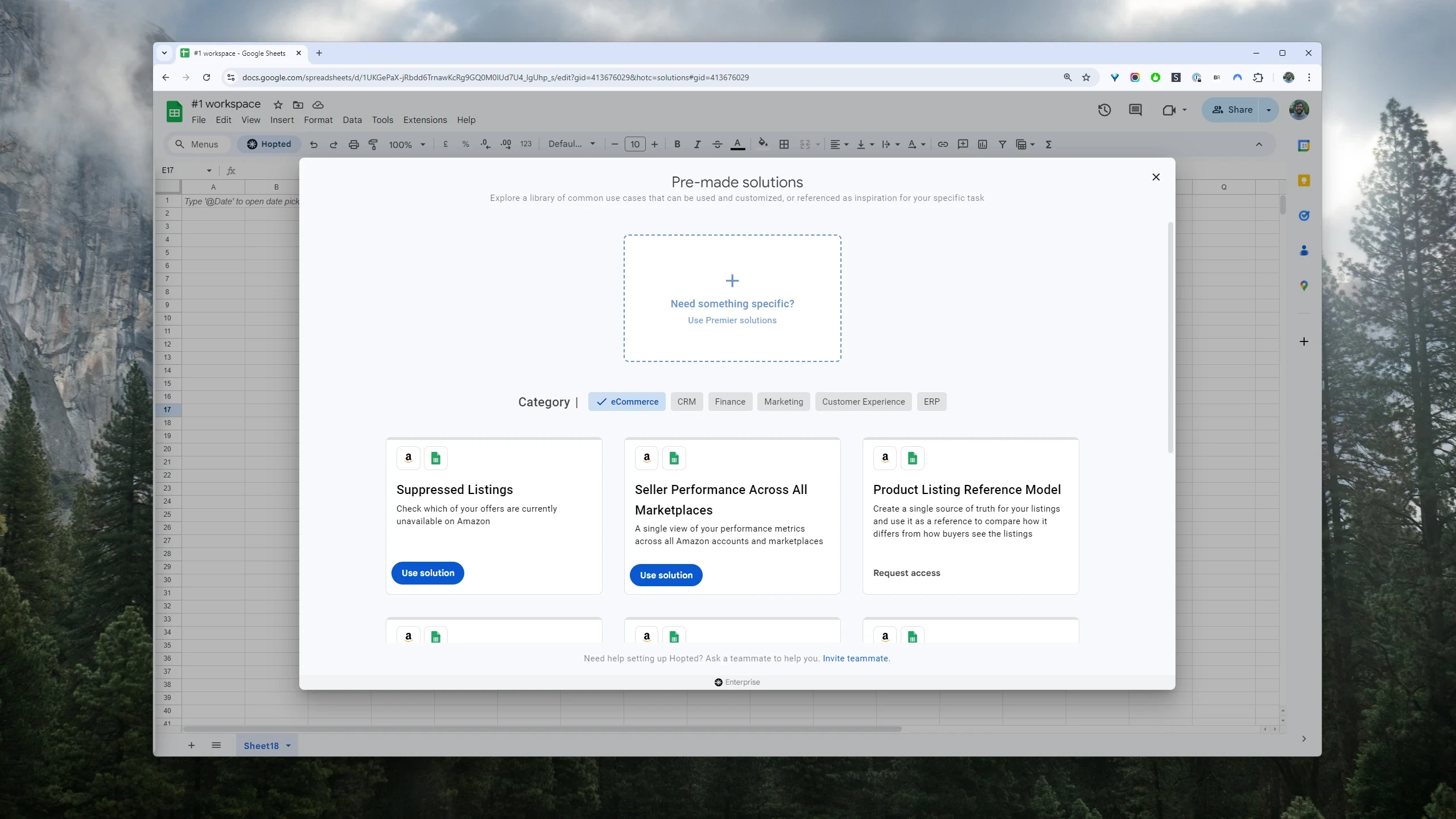
For example, Hopted brings Amazon reports into Google Sheets for inventory tracking and analysis. Refreshes follow a schedule; Amazon’s own reporting delays still apply. AI can work with those numbers, but it cannot make them fresher.
For inventory planning, AI can summarize sales trends and flag unusual changes. Keep customer feedback as a seperate input and check the source rows before acting on a summary.
Imagine a seller managing thousands of SKUs with different lead times. AI could help prioritize replenishment reviews, while the seller checks supplier capacity and cash constraints. It does not give sellers direct control over stock placement inside Amazon’s fulfillment network.
My expectaction is that teams who test small, repeatable uses will learn faster. Buying an AI tool alone is no guarantee of growth.
Trend 2: AI will accelerate disruption in eCommerce categories
AI is helping sellers solve previously difficult problems by transforming how they approach eCommerce.
Consider improving Amazon listings. Amazon’s own generative AI listing tools can draft content for sellers to review. Check every product claim and image before submitting; fluent copy can still describe the wrong product.
AI can make the first draft quicker. Testing whether that draft improves conversion still takes traffic, time and a sensible comparison. I expect this distinction to matter more as producing content gets easier.
My prediction is that smaller teams will be able to test more ideas in a category. Whether they displace established brands will depend on the product, margins and execution as much as the tools.
Trend 3: The rise of the “full stack” Amazon seller
Successful sellers are no longer just focused on managing listings and stock—they are increasingly taking responsibility for their entire business ecosystem, from inventory management to customer acquisition, and marketing.
A practical starting point is to bring sales, stock and advertising reports together with Hopted, then use AI to explore questions. Budget changes and replenishment orders still need a clear owner. Having the data in one sheet does not automatically optimize bids.
AI can connect clues across those reports, but it can also misread a column or miss a change in reporting periods. In practice a small check against the original report is time well spent.
Start with one recurring task, measure the time saved, and check the quality of the result. That is a more useful test than asking whether the whole business is “AI-powered” yet.
