Should I Join Amazon Vendor Central?
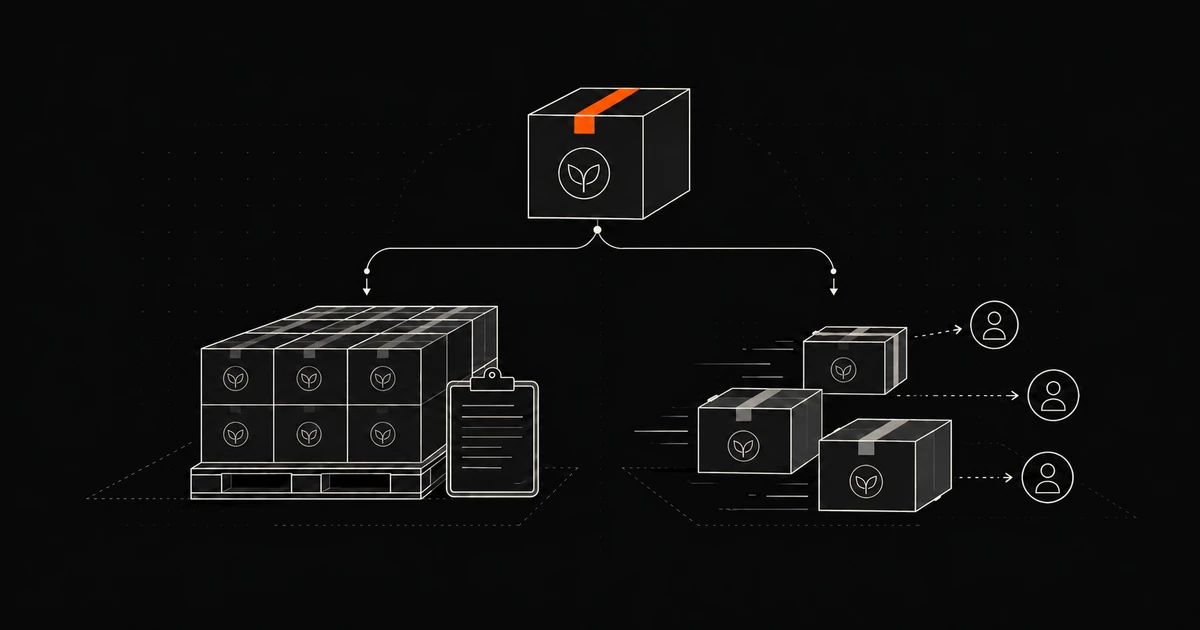
Amazon Vendor Central can look like a prize: a chance to supply Amazon wholesale instead of selling each order yourself. But an invitation is a different commercial relationship, not a promotion to a better kind of account.
The useful question is whether that relationship fits your products, operations, and cash flow. Let’s work through the differences, the benefits, and the costs that are easy to overlook. The examples use the US store and US dollars; your marketplace, purchase orders, and signed agreements determine the terms that apply to you.
How is Vendor Central different to Seller Central?
With Vendor Central, you supply products to Amazon, which sells them to customers as the retailer. This is the first-party, or 1P, relationship. With Seller Central, you list and sell your own products to customers as a third-party, or 3P, seller. Amazon’s Seller Central overview confirms the distinction and that Vendor Central is invitation-only.
For the retail procurement model discussed here, Amazon issues purchase orders and you supply the agreed goods. Amazon handles the downstream retail sale. That does not mean you can forget product information, compliance, replenishment, or the obligations in your supply agreement.
| Decision | Seller Central | Vendor Central retail procurement |
|---|---|---|
| Who buys from you? | The customer ordering your seller offer | Amazon, as your wholesale customer |
| Who sets the offer price? | You set your seller offer price | Amazon sets its retail price; evaluate your wholesale terms separately |
| What starts fulfillment? | A customer order for your offer | An Amazon purchase order you review and acknowledge |
| What should you model? | Retail proceeds less selling, fulfillment, advertising, and other costs | Wholesale receipts less agreed deductions, supply, and operating costs |
Amazon’s official comparison of the two models explains the different pricing and retail responsibilities. Compare net results, rather than comparing the retail price with the wholesale price as though they were the same revenue.
How is Vendor Central different to FBA?
Sellers can confuse Vendor Central and Fulfillment by Amazon because goods may end up in Amazon’s fulfillment network in either case. They answer different questions.
Vendor Central describes a supply relationship with Amazon. FBA is a fulfillment service: you remain the seller, while Amazon stores, picks, packs, and ships your orders and handles customer service and returns for those orders. You still have to manage your product, pricing, inventory planning, and business costs.
Also check which vendor program you are discussing. In Amazon’s terminology, retail procurement vendors send inventory to Amazon; Direct Fulfillment vendors ship customer orders on Amazon’s behalf. “Vendor” does not always mean Amazon stores and ships every unit. Nor should you promise a particular Prime badge or delivery date from the account label alone.
What’s great about Vendor Central
Amazon orders from you
A purchase order gives you something concrete to plan against: the requested items, quantities, and dates. Amazon’s Vendor Orders documentation covers receiving orders, accepting or rejecting them, and handling changes and cancellations.
This can suit an established wholesale operation. It does not remove forecasting work or guarantee the next order. Keep the difference between a forecast and a purchase order clear, and plan what happens when an order changes.
For integration work, review the options available to your vendor account, including its EDI documentation and supported APIs. An existing EDI system still needs a properly configured Amazon connection; it is not an automatic plug-in.
Larger orders can fit a wholesale operation
If your arrangement includes pallet shipments or larger batches, compare their preparation and transport requirements with the work you do today. A large order can be useful, but quantity by itself says little about profit. Work out the net receipt, the cost of supplying it, and when you expect payment before celebrating the revenue.
Content contributions can have a specific advantage
There is a real but narrower point here than “vendors control the listing.” Amazon’s current US A+ Content guidance says retail-vendor A+ Content in the “From the manufacturer” section is generally prioritized over seller-submitted A+ Content on the same ASIN.
That is a rule about A+ Content placement. It is not exclusive ownership of every field on a product detail page, or a guarantee that any requested edit will be accepted. Check what appears on the customer page after publishing. For the wider distinction, read why a listing change does not always change the product page.
A+ Content and Brand Stores
These tools can help explain a product and present a brand’s range. Check the relevant content manager and your account permissions for the ASINs you want to use; do not assume every feature or Premium A+ option is activated by a vendor invitation.
Brand Stores are available to vendors, agencies, and sellers enrolled in Brand Registry. Creating and maintaining a Store is free, and advertising is not required to create one. Eligible sellers can therefore use brand-building tools too; joining Vendor Central is not the only route.
The Featured Offer still needs attention
Do not include a guaranteed Buy Box win in the business case. The Featured Offer is the prominent purchase option on a product page. Amazon’s current overview discusses competitive pricing, delivery, the order experience, and stock availability. Those are operational questions, not a promise attached to a Vendor Central invitation.
What’s not so great about Vendor Central
Check the reports you will actually receive
Before accepting terms, ask to see the reporting access that comes with the proposed relationship. Do not budget from an old ARA Basic versus ARA Premium feature list.
Amazon now documents Vendor Sales, Inventory, Traffic, Forecasting, and Net Pure Product Margin reports, as well as separate Brand Analytics reports. The current Amazon report definitions distinguish vendor and seller data and their access requirements. Availability depends on the report, account access, and supported store.
One easy mistake: Net PPM describes Amazon’s net pure product margin from selling your products. It is not your manufacturing margin or your cash profit. Keep your own costs and deductions in a separate calculation.
Amazon sets its retail price
Your wholesale price and Amazon’s customer-facing price are different things. Evaluate the amount Amazon will pay you under the proposed agreement, rather than assuming you can dictate its retail offer.
If minimum advertised pricing or another distribution commitment matters to your business, review the actual contract and obtain appropriate advice before signing. Do not treat a general article as assurance that a pricing restriction will be accepted or enforceable.
Allowances, deductions, and payment timing
Build the model from your proposed terms. Review any marketing or co-op allowances, freight arrangements, damage or return allowances, early-payment discounts, and operational deductions that apply. Ask how each amount is calculated, when it is deducted, and what evidence you need to challenge an error.
Read the payment terms, the event that starts the payment clock, return rights, and current shipment requirements together. A profitable invoice on paper is not much help if the timing leaves you short of cash.
There is no useful universal vendor fee percentage to insert here. Equally, Seller Central margins are not fixed: use the current selling and fulfillment cost information and your actual advertising, returns, and product costs for the comparison.
Promotions need their own calculation
Keep the simple example, but make its assumptions explicit. Suppose your agreed wholesale price is $10 per unit and a particular promotion requires you to fund $5 for each qualifying unit. That leaves $5 before the product cost and every other applicable deduction or expense. It does not turn the original wholesale price into $5.
This is illustrative arithmetic, not a current coupon fee schedule. Check the actual promotion agreement, qualifying units, funding method, and any additional charges before approving it. A promotion that grows orders can still lose money.
How to make Seller Central and Vendor Central work together
The two account types can coexist. Amazon’s Seller Central registration guidance even describes syncing access with an existing Vendor Central login. Whether supplying a particular product through both models makes sense still depends on your agreements and account eligibility.
Pricing matters
Do the economics for each ASIN and channel separately. Compare wholesale receipts with the net proceeds of your independently set seller offer, including fulfillment, advertising, and returns. Then look at availability, production capacity, and working capital.
Do not use “raise the seller price to encourage Amazon purchase orders” as a rule. That assumes a purchasing response you cannot rely on. Start with what each route earns and what you can supply reliably, its less glamorous work but more useful.
Coordinate advertising
Amazon Ads supports both sellers and vendors, with eligibility varying by product and store. Use current names and requirements from the Amazon Ads FAQ, including Sponsored Products and Sponsored Brands; do not plan from the old “Brand Display” and “Product Display” labels.
If the same products appear in two advertising accounts, give someone responsibility for the combined budget and reporting. Match account, ASIN, marketplace, currency, and date range. Campaign age or a reporting subscription alone is a poor reason to direct the next dollar.
For a shared workbook, Hopted’s Vendor Central connector imports supported vendor data into Google Sheets on a schedule. Its Vendor report directory covers Sales, Inventory, Traffic, Forecasting, Net PPM, and Purchase Orders. Keep vendor wholesale orders, Amazon retail sell-through, and your seller orders distinct when reviewing them together. An import helps with the review; it does not accept purchase orders or negotiate terms for you.
Can I sell my private label brand through Vendor Central?
Owning a brand does not create a right to a vendor invitation. Vendor Central remains invitation-only. Brand Registry, a strong sales history, or a service provider’s promise is not an acceptance letter.
If Amazon approaches you, verify the invitation through official Amazon channels and review the offer on its merits. Ask which products and stores are covered, which supply program is proposed, and who is responsible for each operational step. Do not build your launch plan around an assumed invitation or an unverified explanation of Amazon’s internal selection algorithm.
Over to you
Vendor Central can fit a manufacturer or distributor that wants a wholesale customer and has the operations to serve one. Seller Central can fit a business that wants to manage its own retail offer. Neither label settles the question of profitability.
Put the proposed terms beside your current results. Check net receipts, cash timing, supply work, content access, and reporting. Make the decision product by product where necessary, and leave room to revisit it as terms and costs change.
Adapted from an article originally published on Bindwise; reviewed and updated for Hopted by Alex Borisenko-Markovich and the Hopted editorial team.